Travel as a Pathway to Healing and Learning
Enriching Foster Children’s Minds and Hearts
Travel is more than sights and souvenirs. For foster children, even modest journeys, such as day trips, museum visits, and nature walks, can open doors to emotional healing, self-discovery, and expanded horizons. When families step outside their usual environments, possibilities emerge: places to breathe, connect, explore, and learn together.
At Pathway Caring for Children, we see travel as a unique tool in the caregiver toolkit. In this post, we’ll explore how travel can nurture both mental health and education, share Ohio-based destination ideas, offer trauma-informed tips for planning, and show how Pathway supports families in making travel meaningful.
Dual Benefits: Emotional Healing & Educational Enrichment
Healing Through New Environments
Trauma often binds children to internal loops of anxiety, hypervigilance, or somatic stress. A change of scenery helps “reset” the nervous system. Exposure to nature, museums, and cultural venues, or simply a new city street, can:
- Reduce stress and stimulate curiosity
- Create neutral, shared spaces for connection (away from “home stressors”)
- Generate new memories of safety, wonder, and shared joy
- Build trust: when a caregiver partners in discovery, children feel seen and valued

Learning Beyond the Classroom
Travel is inherently educational. It translates history, science, art, geography, and culture into lived experience. When a child stands in a museum or explores a historical site, they see relationships between ideas, people, and place. That kind of embodied learning often “sticks” deeper than a textbook lesson. When trip conversations connect to what the child is studying in school, those moments become extensions of their curriculum.
Ohio Destinations Worth Exploring
For families in Northeast Ohio or the surrounding areas, here are a few enriching, accessible destinations:
- Great Lakes Science Center (Cleveland, Ohio): A hands-on STEM museum with exhibits, demonstrations, and the NASA Glenn Visitor Center.
- Cleveland Museum of Natural History: Beautiful exhibits on nature, paleontology, planetarium shows, and rotating special exhibits.
- COSI – Center of Science and Industry (Columbus, Ohio): Interactive exhibits in science, life, space, and more.
- Dayton Art Institute (Dayton, Ohio): A fine arts museum with collections spanning centuries, great for artistic inspiration.
- OH WOW! Science Center (Youngstown, Ohio): A regional children’s science center ideal for younger visitors.
- Campus Martius Museum (Marietta, Ohio): A history museum interpreting Ohio’s pioneer beginnings and settlement.
You’ll also find many smaller historical societies, nature centers, botanical gardens, and local museums listed in the Ohio Museums Association guide. Pairing short road trips with more profound experiences gives flexibility and richness (e.g., combining nature and museum stops in one day).
Preparing Foster Children for Travel: Trauma-Informed Tips
Travel can be exciting and also stressful for children who carry trauma. Thoughtful preparation nurtures emotional safety.
1. Maintain Predictability & Structure
- Share the itinerary (as much as possible) in advance, including stop times, rest breaks, and meal times.
- Use visual schedules or maps if helpful.
- Keep some familiar routines (bedtime rituals, snack times) to anchor the day.
2. Normalize Feelings & Encourage Communication
- Open the door: “How are you feeling about this trip?”
- Pause for check-ins: “Do you want a break?”
- Use creativity (such as drawing, journaling, or photography) to express discomfort or wonder.
3. Build in Choice & Autonomy
- Allow the child to help select one stop or one activity.
- Let them carry a small item (such as a camera or journal) to make the trip their own.
- Offer “opt-out” breaks if they need rest or space.
4. Plan Around Interests & School Learning
● If the child loves animals, schedule a visit to a zoo or aquarium.
● Tie stops to what they’re studying in school (e.g., natural history, local history).
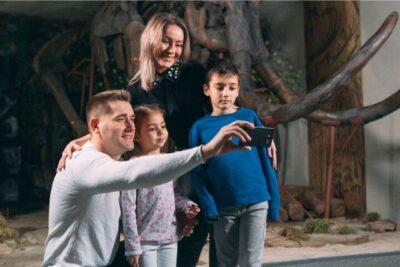
● Use photo prompts: ask them to take a picture of a “thing that surprises you” and talk about it.
5. Manage Triggers Gently
● Be ready with comfort items (headphones, soft cloth, water).
● Bring “reset” stops: a quiet nature trail, park bench, or bathroom break.
● Avoid overscheduling, allow downtime, and flexibility.
How Pathway Supports Travel Planning & Enrichment
We know travel is not always easy, especially for foster families dealing with permissions, resources, and trauma sensitivities. That’s why Pathway aims to support families in turning trips into healing and educational opportunities.
1. Guidance on Permissions & Logistics
If your trip crosses county lines or state borders, you’ll often need approval from the child’s county case manager or agency. (For long-distance or international travel, see our related blog on permissions and travel planning.) Be sure to run your plans past your county case manager.

2. Resource Sharing & Group Travel
Pathway may occasionally organize group or educational trips for foster families in group settings, adding safety, cost-sharing, and companionship. We provide resource lists (including museums, parks, and cultural sites) and budgeting tips in our caregiver training and Family Empowerment services. Our therapists and case managers can help tailor trips to the child’s emotional needs (rest stops, pacing, stimuli).
3. Embedding Reflection & Meaning
We encourage caregivers to include reflection prompts or journaling during travel. A few minutes to draw or write a highlight helps embed meaning, honor feelings, and connect experience to identity. Often, therapists may later reference those journal moments to open discussion.
4. Supporting Schools & Enrichment
Travel experiences can strengthen a child’s voice in school: when they share their trip, teachers and peers get to see them beyond “student identity.” We can help caregivers connect these experiences with classroom learning to deepen impact.
Turning Travel Into Memory, Learning & Connection
When thoughtfully planned, travel becomes more than a trip; it becomes a gift of belonging, resilience, curiosity, and memory. Families create stories: “Remember when we saw that dinosaur skeleton?” “We rode the carousel there, you picked that snack.”
These stories become part of the child’s narrative, anchored in safety and closeness. Travel teaches children that they are worth planning for, exploring, and investing in. That is healing.
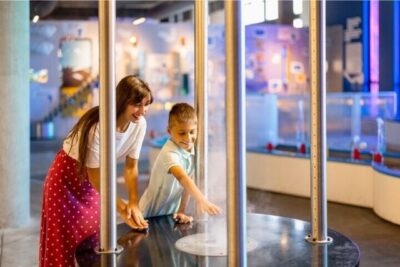
If you’re a foster parent, caregiver, or supporter, consider making travel a regular piece of your care plan, not only for fun but for healing, growth, and connection. Start small: a one‑day museum trip, nature preserve walk, or local historical site. Use it as a space for conversation, discovery, and memory-making. Before heading out on journeys beyond your local county, don’t forget: run your travel plans past your foster child’s county case manager for approvals and clarity.
For guidance on long-distance or out-of-state travel, see our linked blog on permissions and travel planning. When you’re ready to plan a meaningful travel experience and want support in making it trauma-informed or educational, reach out to Pathway. We’re here to provide resources, coaching, and connection every step of the way. Let’s turn roads into bridges, bridges between the past and the future, between the heart and the mind, between caregiver and child.