The Healing Power of Art
How Creative Expression Supports Mental Health in Foster Children
Every child carries stories inside them, some beautiful, some painful. For foster children, many of those stories include loss, confusion, trauma, or silence. They may struggle to find the words to describe how they feel, or fear that speaking will reopen wounds.
That’s why creative expression through drawing, painting, photography, collage, and other forms of release serves as a lifeline. At Pathway Caring for Children, we believe in the power of art, not only as a therapeutic tool but also as a bridge to emotional safety, communication, and healing. In this post, we’ll explore how art therapy works, why it’s especially meaningful for foster youth, how Pathway supports creative outlets, and practical ideas caregivers can use to nurture creativity at home.
Understanding Trauma & the Need for Non‑Verbal Expression
Children in foster care often come from backgrounds of instability, neglect, abuse, separation, or emotional trauma. These experiences can leave them with fragmented memories, distrust, hypervigilance, anxiety, and a weakened sense of self. Verbalizing those internal experiences can feel risky or overwhelming.
Art gives them a non-verbal path to safety. When words fail, the canvas, paper, camera, or clay can carry emotion. By externalizing internal states, such as anger, fear, shame, and hope, through images or patterns, children gain distance, perspective, and a voice.
What Is Art Therapy & How It Works
Art therapy is a therapeutic modality that combines psychological insight with artistic materials and processes. It is conducted under the guidance of a trained art therapist (often a licensed mental health professional with additional training in art modalities). Its purpose is not to produce “fine art,” but to facilitate emotional expression, insight, and healing.
Key components of art therapy include:
- Safe, non-judgmental space: Clients are encouraged to express freely, without criticism.
- Creative materials and prompts: The therapist might offer suggestions (e.g., “draw your safe place,” “use colors to show emotions”) or allow spontaneous creation.
- Reflection and discussion: After creation, the therapist may invite the child to talk about or simply reflect silently on their art, helping them connect imagery to inner experience.
- Pacing and consent: Especially when trauma is involved, the child controls how far they go, avoiding re-traumatization.
Benefits for children who have experienced trauma include:
- Emotional regulation (learning to externalize, modulate, and contain feelings)
- Increased self-awareness and insight into internal states
- Reduced anxiety, shame, and avoidance symptoms
- Validation of experience and rebuilding of agency (choosing materials, themes)
- Strengthening the therapeutic alliance: Children may feel safer to share verbally over time.
In essence, art therapy invites children to tell their stories, but in a language they can pace and control.
The Role of Creative Expression in Healing
Drawing, Painting & Photography as Tools for Emotional Regulation
These creative media provide children with tools to express what they may not yet understand:
Drawing & painting allow children to choose colors, shapes, symbols, and forms that reflect their emotional states (e.g., swirling lines for turmoil, closed shapes for containment).
Photography can help a child capture what “feels safe” or explore perspective. Giving a disposable or digital camera invites them to observe and document their world, gradually building narrative control.
Collage or mixed media allows combining images, textures, and words. This is helpful when a child wants to merge visual and verbal elements.
Through repeated creative expression, children practice regulating arousal, tolerating frustration, and naming what is internal. Their art becomes a mirror and container for what is inside.
How Art Is Used to Support Foster Youth at Pathway
At Pathway, we strive to integrate creative practices into our mental health and caregiving support. While we don’t always run a formal art therapy program in every placement, we weave creative expression into therapy, group programming, and caregiver coaching.
Here are ways we currently incorporate art:
During therapy sessions, especially with youth reluctant to talk, therapists may use drawing or photo prompts to open conversation.
In group workshops or camps, we host art‑based healing activities, journaling, visual storytelling, and mural projects to foster peer connection, shared expression, and hope.
In caregiver training (e.g., in our Family Empowerment Program), we introduce caregivers to the value of creativity in emotional regulation, so they can support art at home.
For youth in transition programs (see Transitional Age Youth Services), we encourage art-based identity exploration, such as collage of future goals, photo journaling, and vision boards.
Our goal is not to force art, but to make it available as a safe choice, an alternative language, a healing tool.
Tips for Caregivers: Encouraging Creativity at Home
You don’t need to be an artist or art therapist to invite creativity into your home. Below are gentle, practical ideas to help your child express, explore, and find solace.
1: Provide a Creative Corner
- Set aside a small table or shelf with basics:
- Drawing paper, sketchbooks, colored pencils, markers, paints
- Collage materials: old magazines, glue, scissors
- Clay or modeling dough
- A disposable or inexpensive digital camera
- Visual journals or blank notebooks
Let the child know this space is theirs, no judgment, no expectations.
2: Use Art Prompts (When the Mood Calls)
Here are simple prompts you might offer:
- “Draw your safe place.”
- “What color is your worry today? Paint it.”
- “Take a photo of something that makes you feel calm.”
- “Make a collage of things you like.”
- “Draw a superhero version of yourself.”
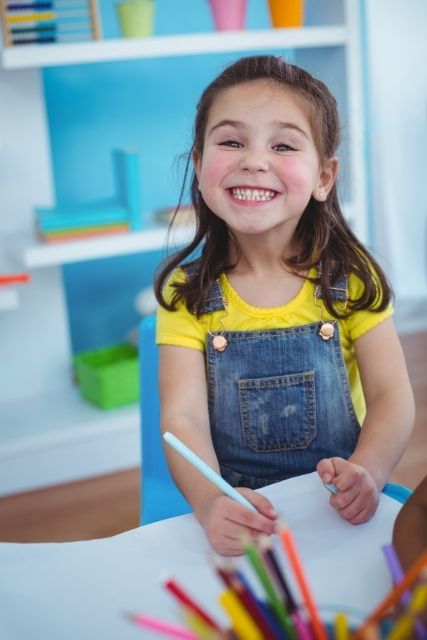
If they decline, that’s okay, offer gently another time.
3: Be Present, Not Directive
- Resist interpreting or judging the artwork.
- Ask open-ended questions: “What do you like about this part?” or “What’s happening here?”
- Let them lead. If they want to paint, paint; if they want silence, offer materials quietly.
- You can create alongside them to build a connection.
4: Celebrate Process Over Product
The healing is in creating, not perfecting. Praise effort, curiosity, and bravery. Remind them that mistakes or “ugly parts” are part of expression.
5: Respect Privacy & Ownership
If a child creates something private, don’t force discussion. Let them know you respect their boundaries. Ask if and when they want to share.
6: Incorporate Art Into Routine
Art doesn’t need to be formal. A 10-minute doodle before bed or a photo walk on a Saturday can be ways to stay connected to creative rhythms.
Art Holds a Quiet Power
It bridges what can’t yet be spoken, offers safety in expression, and whispers, “You are seen.” For children who have walked through loss, trauma, or silence, creativity can begin weaving new pathways of healing.
If you’re a foster parent, caregiver, or community member, here’s how you can start:
- Introduce art as a gentle, optional outlet at home.
- Encourage youth to explore what feels safe, at their own pace.
- Reach out to Pathway if you want help integrating creative practices into caregiving or therapy.
We’d be honored to support your journey. Contact Pathway to explore mental health services that incorporate expressive arts, or download our coloring page, which you can use with your child.
Together, we can offer children more than walls; they can have open space, voice, and something to hold onto as they heal.